Hong Kong
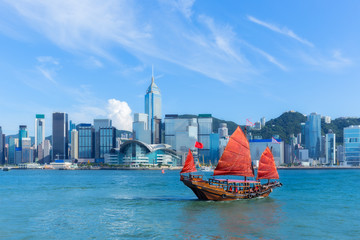
Hong Kong (Chinese: 香港] (About this soundlisten)), formally the Hong Kong Special Administrative Region of the People's Republic of China, is an extraordinary regulatory locale on the eastern side of the Pearl River estuary in southern China. With over 7.4 million individuals of different nationalities in a 1,104-square-kilometer (426 sq mi) region, Hong Kong is the world's fourth-most-thickly populated district.
Hong Kong turned into a state of the British Empire subsequent to Qing China surrendered Hong Kong Island toward the finish of the First Opium War in 1842. The province extended to the Kowloon Peninsula in 1860 after the Second Opium War, and was additionally expanded when Britain acquired a 99-year rent of the New Territories in 1898. The region was come back to China when the rent terminated in 1997.[19] As a unique authoritative locale, Hong Kong's arrangement of government is isolated from that of territory China
Initially an inadequately populated zone of cultivating and angling villages,the region has turned out to be one of the world's most huge money related focuses and business ports.It is the world's seventh-biggest exchanging element, and its lawful delicate (the Hong Kong dollar) is the world's thirteenth most-exchanged cash. In spite of the fact that the city has one of the most elevated per capita earnings on the planet, it has extreme salary disparity.
The domain has the biggest number of high rises on the planet, most encompassing Victoria Harbour.[26] Hong Kong positions seventh on the UN Human Development Index, and has the seventh-longest future in the world.[9] Although more than 90 percent of its populace utilizes open transportation,[27] air contamination from neighboring modern territories of terrain China has brought about an abnormal state of air particulates.

History
The locale is first known to have been involved by people amid the Neolithic time frame, around 6,000 years ago. Early Hong Kong pilgrims were a semi-beach front people who relocated from inland and brought information of rice cultivation. The Qin tradition joined the Hong Kong territory into China without precedent for 214 BCE, subsequent to overcoming the indigenous Baiyue. The area was solidified under the Nanyue kingdom (a forerunner province of Vietnam) after the Qin collapse, and recovered by China after the Han conquest. During the Mongol success, the Southern Song court was quickly situated in present day Kowloon City (the Sung Wong Toi site) before its last annihilation in the 1279 Battle of Yamen. By the finish of the Yuan administration, seven vast families had settled in the district and possessed a large portion of the land. Pilgrims from close-by regions moved to Kowloon all through the Ming dynasty.
The soonest European guest was Portuguese adventurer Jorge Álvares, who landed in 1513. Portuguese vendors built up an exchanging post called (Tamão) in Hong Kong waters, and started customary exchange with southern China. Despite the fact that the brokers were removed after military conflicts in the 1520s,Portuguese-Chinese exchange relations were restored by 1549. Portugal procured a perpetual rent for Macau in 1557.

After the Qing triumph, sea exchange was restricted under the Haijin strategies. The Kangxi Emperor lifted the preclusion, enabling outsiders to enter Chinese ports in 1684. Qing experts built up the Canton System in 1757 to direct exchange all the more entirely, limiting non-Russian boats to the port of Canton. Although European interest for Chinese wares like tea, silk, and porcelain was high, Chinese enthusiasm for European produced merchandise was immaterial. To counter the exchange lopsidedness, the British sold a lot of Indian opium to China. Looked with a medication emergency, Qing authorities sought after perpetually forceful activities to stop the opium trade. The Daoguang Emperor rejected proposition to legitimize and charge opium, requesting majestic magistrate Lin Zexu to annihilate the opium exchange 1839. The magistrate demolished opium reserves and stopped all remote trade, compelling a British military reaction and setting off the First Opium War. The Qing surrendered right off the bat in the war and surrendered Hong Kong Island in the Convention of Chuenpi. Be that as it may, the two nations were disappointed and did not confirm the agreement.After over a time of further threats, Hong Kong Island was formally surrendered to the United Kingdom in the 29 August 1842 Treaty of Nanking.
Pioneer Hong Kong signal from 1959– 1997
Authoritative framework was rapidly developed by mid 1842, yet theft, sickness, and threatening Qing approaches towards Hong Kong kept the administration from drawing in dealers. The Taiping Rebellion, when numerous well off Chinese fled territory choppiness and settled in the state, enhanced conditions on the island. Further strains between the British and Qing over the opium exchange swelled into the Second Opium War. The crushed Qing were again compelled to surrender arrive, surrendering Kowloon Peninsula and Stonecutter's Island in the Convention of Peking. By the finish of this war, Hong Kong had advanced from a transient pilgrim station into a noteworthy entrepôt. Fast monetary enhancement amid the 1850s pulled in remote venture, as potential partners turned out to be progressively positive about Hong Kong's future.
The province was additionally extended in 1898, when Britain acquired a 99-year rent of the New Territories. The University of Hong Kong was built up in 1911 as the domain's first advanced education institute. Kai Tak Airport started activity in 1924, and the settlement kept away from a drawn out financial downturn after the 1925– 26 Canton– Hong Kong strike. At the beginning of the Second Sino-Japanese War in 1937, Governor Geoffry Northcote proclaimed Hong Kong an impartial zone to shield its status as a free port.[ The provincial government arranged for a conceivable assault, clearing every single British lady and youngsters in 1940. The Imperial Japanese Army assaulted Hong Kong on 8 December 1941, indistinguishable morning from its assault on Pearl Harbor.Hong Kong was possessed by Japan for very nearly four years previously Britain continued control on 30 August 1945.

Its populace bounced back rapidly after the war as talented Chinese vagrants fled from the Chinese Civil War, and more exiles crossed the outskirt when the Communist Party took control of terrain China in 1949. Hong Kong turned into the first of the Four Asian Tiger economies to industrialize amid the 1950s.With a quickly expanding populace, the pilgrim government started changes to enhance framework and open administrations. People in general lodging bequest program, the Independent Commission Against Corruption (ICAC), and Mass Transit Railway were built up amid the post-war a very long time to give more secure lodging, uprightness in the common administration, and the sky is the limit from there solid transportation. Although the region's aggressiveness in assembling slowly declined because of rising work and property costs, it changed to an administration based economy. By the mid 1990s, Hong Kong had built up itself as a worldwide monetary focus and dispatching hub.
Government and politics

Hong Kong is a special administrative region of China, with executive, legislative, and judicial powers devolved from the national government. The Sino-British Joint Declaration provided for economic and administrative continuity through the transfer of sovereignty, resulting in an executive-led governing system largely inherited from the territory's history as a British colony. Under these terms and the "one country, two systems" principle, the Basic Law of Hong Kong is the regional constitution.
The regional government is composed of three branches:
Executive: The Chief Executive is responsible for enforcing regional law, can force reconsideration of legislation, and appoints Executive Council members and principal officials.Acting with the Executive Council, the Chief Executive-in-Council can propose new bills, issue subordinate legislation, and has authority to dissolve the legislature.
Legislature: The unicameral Legislative Council enacts regional law, approves budgets, and has the power to impeach a sitting Chief Executive
Judiciary: The Court of Final Appeal and lower courts, whose judges are appointed by the Chief Executive on the advice of a recommendation commission, interpret laws and overturn those inconsistent with the Basic Law.
The Chief Executive is the head of government, and serves for a maximum of two five-year terms. The State Council (led by the Premier of China) appoints the Chief Executive after nomination by the Election Committee, which is composed of 1,200 business, community, and government leaders.
The Legislative Council has 70 members, each serving a four-year term: 35 directly elected from geographical constituencies and 35 representing functional constituencies (FC). Thirty FC councilors are selected from limited electorates representing sectors of the economy or special-interest groups,
and the remaining five members are nominated from sitting District Council members and selected in region-wide double direct elections. All popularly elected members are chosen with proportional representation. The 30 limited electorate functional constituencies fill their seats using first-past-the-post, or instant-runoff, voting.
Twenty-two political parties had representatives elected to the Legislative Council in the 2016 election.[98] These parties have aligned themselves into three ideological groups: the pro-Beijing camp (the current government), the pro-democracy camp, and localist groups. The Communist Party does not have an official political presence in Hong Kong, and its members do not run in local elections.Hong Kong is represented in the National People's Congress by 36 deputies chosen through an electoral college, and 203 delegates in the Chinese People's Political Consultative Conference
Website
For more click here
Post a Comment